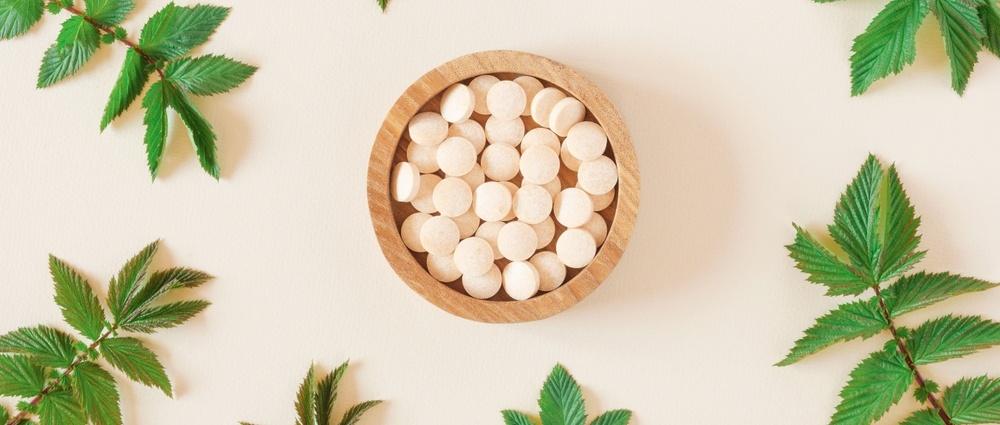
Do herbal remedies for menopause really work?
Peer reviewed by Dr Colin Tidy, MRCGPLast updated by Lawrence HigginsLast updated 3 Feb 2026
Meets Patient’s editorial guidelines
- DownloadDownload
- Share
- Language
- Discussion
For women, menopause is a natural phase of life. But can herbal remedies offer relief from its symptoms? While some evidence claims certain supplements may work, these products are unregulated, so it's hard to know what you're taking.
Here we explain what things to look out for that can help you check whether a product is safe and effective.
Sign up for our free 10-week Menopause course!
Each week, we'll explore different topics to help you better understand and navigate your menopausal journey, including HRT, diet, exercise, and mental health.
By subscribing you accept our Privacy Policy. You can unsubscribe at any time. We never sell your data.
In this article:
Continue reading below
Natural remedies for menopause
Menopause is a big transitional phase for any woman. It signals the end of menstrual cycles, and a decline in the production of reproductive hormones such as oestrogen and progesterone.
Menopause is defined as when you have not had a period for 12 months - this is usually between the age range of 45 to 55, and at the average age of 51.
However, perimenopausal and premenopausal symptoms - traditionally associated with menopause, but seen before or after your last period - can last several months to several years. That means it's not uncommon for symptoms to start in your early 40s, or even your late 30s.
What happens during menopause?
Back to contentsMany women find they have the following symptoms:
Hot flushes.
Chills.
Mood fluctuations.
Continue reading below
Hormone replacement therapy (HRT)
Back to contentsEvery woman will experience symptoms differently. Some may be able to ease their symptoms through lifestyle adjustments alone, while others may use hormone replacement therapy (HRT).
Complementary and alternative therapies
Back to contentsAround 1 on 2 of women in Western countries choose to use complementary and alternative therapies, including mind and body practices such as hypnosis. Herbal (plant-based) remedies are another popular natural treatment option. There are several on the market, but is their effectiveness backed by science?
Continue reading below
Do natural menopause treatments really work?
Back to contentsThe evidence that natural remedies for menopause work is mixed, and scientific research is limited. According to the charity Women's Health Concern, herbal remedies may provide some symptom relief, but are unlikely to improve bone health or heart function.
Effectiveness
Research is still ongoing to determine how effective herbal remedies for menopause are at easing symptoms. A review of studies1 found modest reductions in the occurrences of hot flushes and vaginal dryness, although the need for further evidence was also identified. The quality of current evidence is a big limitation - as many as 3 out of 4 of these studies had a high likelihood of bias that may influence their results.
Adverse effects of herbal remedies
While reports of side effects for herbal remedies are relatively rare, there are some mild symptoms that may occur. For example, black cohosh2 can cause stomach upset, skin rashes, headache, vaginal bleeding, and weight gain. Some herbal remedies may also interact with drugs and cause side effects.
One such example is St John's wort, which can increase the chance of side effects in people also taking certain antidepressants. Always consult your pharmacist, who will be able to advise on the safe natural and drug therapy combinations.
Regulation
Safety concerns regarding the lack of regulation are another important factor. The National Institute for Health and Care Excellence (NICE) warns that herbal remedies which are not regulated by a medicine authority shouldn't be considered safe. This is because different products have different ingredients and concentrations, which may increase the odds of more serious side effects.
There have been reports of contamination in certain natural remedies for menopause. For example, some commercial black cohosh supplements contain the wrong herb or other herbs not listed on the label2 which has led to adverse reactions.3
Safety tips
Look for a 'Traditional Herbal Remedy' (THR) logo on the packet - this tells you the product is safely manufactured.
Speak to your pharmacist about complementary therapies - they should ensure that any brands they sell include the THR logo.
NICE highlights black cohosh (such as Menoherb one-a-day) and red clover isoflavones (such as Promensil 40-80 milligrams a day) as herbal alternatives with the best evidence.
Let your pharmacist know you're taking these herbal remedies - they can advise if they may interact with any other medicines you’re taking.
What to be wary of
Too-good-to-be-true claims - such as products claiming to be a "cure" for menopause symptoms - which in reality can only be managed.
Products that are only offered from one manufacturer.
All active ingredients not being listed - don't trust "secret formulas".
Product testimonials - these may come from people who are paid for their endorsement.
Herbal remedies for menopause relief
Back to contentsThere are many herbal remedies for menopause on the market and most are used to treat a wide range of menopause symptoms. The following are some of the most popular plant-based products.
Black cohosh.
Red clover.
St John's wort
Ginseng.
Evening primrose oil.
Black cohosh for menopause
What: A species of buttercup native to North America.
Benefits: Some studies have found that black cohosh can help to ease menopause symptoms when compared to a placebo. It also has a low chance of interacting with other medicines.
Considerations: Like all herbal remedies, it's not as effective as HRT at reducing symptoms such as hot flush frequency. There is also conflicting evidence about whether black cohosh is more effective than a placebo.4 While adverse reactions are relatively rare, occasional instances of serious side effects with unlicensed versions include liver damage and low blood pressure. Black cohosh shouldn’t be taken by people who have liver and kidney problems.
Red clover for menopause
What: A flowering plant in the legume family, native to Europe, Western Asia, and Northwest Africa.
Benefits: This remedy appears to have natural oestrogen-like properties that can help with hot flushes.5 There are currently no identified safety concerns for its use.
Considerations: Nonetheless, as with all herbal remedies the scientific evidence is relatively weak, and there's little data on long-term use.
St John's wort for menopause
What: A flowering plant native to Europe, North Africa and West Asia.
Benefits: Some studies6 suggest that St John’s wort may ease symptoms better than a placebo, although there's not enough evidence to know for certain. In particular, some studies suggest it may be as good as prescribed antidepressants at relieving low mood.7
Considerations: It has a high chance of adverse effects from interactions with other drugs, and checking with a healthcare professional before use is advisable. St John's wort should not be taken by women on hormone therapy for breast cancer, as it makes treatment less effective.
Ginseng for menopause
What: A plant root originating in China and used in traditional Chinese medicine.
Benefits: Studies show mixed evidence for the use of ginseng to treat menopausal symptoms in comparison to placebo drugs. A review of research concluded that most have a high chance of bias.
Considerations: Ginseng has been shown to decrease the effectiveness of certain medicines - including chemotherapeutic drugs, HIV drugs, and antidepressants. There is also some evidence that ginseng might affect blood sugar levels.
Evening primrose oil for menopause
What: The seeds of evening primrose, native to North America.
Benefits: There is some limited evidence8 for the effectiveness of primrose oil, although it should be noted that most studies conclude it is no more effective than a placebo. It is generally considered safe and is well tolerated by most people.
Considerations: Although it's widely used, there's insufficient scientific evidence to support its use for menopause treatment. Primrose oil may also interact negatively with certain HIV drugs and, as with all supplements, it's worth checking with a professional if you're on other medicines.
Patient picks for Menopause and HRT
Hormones
What's behind the HRT shortage in the UK?
Women across the UK are struggling to get hold of their hormone replacement therapy prescriptions due to ongoing manufacturing and supply issues.
by Milly Evans
Hormones
How to ease your perimenopause symptoms
Every woman who lives long enough will go through the menopause. The perimenopause describes the transitional period into the menopause, and it is where most women first experience symptoms. There are a number of options to help manage and relieve perimenopause symptoms, both through clinical services and at home.
by Amberley Davis
Further reading and references
- Franco OH, Chowdhury R, Troup J, et al; Use of Plant-Based Therapies and Menopausal Symptoms: A Systematic Review and Meta-analysis. JAMA. 2016 Jun 21;315(23):2554-63. doi: 10.1001/jama.2016.8012.
- Herb-Drug Interactions: What the Science Says; NCCIH Clinical Digest for health professionals, December 2024
- Black Cohosh Fact Sheet for Health Professionals; NIH
- Leach MJ, Moore V; Black cohosh (Cimicifuga spp.) for menopausal symptoms. Cochrane Database Syst Rev. 2012 Sep 12;2012(9):CD007244. doi: 10.1002/14651858.CD007244.pub2.
- Ghazanfarpour M, Sadeghi R, Roudsari RL, et al; Red clover for treatment of hot flashes and menopausal symptoms: A systematic review and meta-analysis. J Obstet Gynaecol. 2016;36(3):301-11. doi: 10.3109/01443615.2015.1049249. Epub 2015 Oct 15.
- Grube B, Walper A, Wheatley D; St. John's Wort extract: efficacy for menopausal symptoms of psychological origin. Adv Ther. 1999 Jul-Aug;16(4):177-86.
- Linde K, Berner MM, Kriston L; St John's wort for major depression. Cochrane Database Syst Rev. 2008 Oct 8;2008(4):CD000448. doi: 10.1002/14651858.CD000448.pub3.
- Farzaneh F, Fatehi S, Sohrabi MR, et al; The effect of oral evening primrose oil on menopausal hot flashes: a randomized clinical trial. Arch Gynecol Obstet. 2013 Nov;288(5):1075-9. doi: 10.1007/s00404-013-2852-6. Epub 2013 Apr 27.
Article history
The information on this page is peer reviewed by qualified clinicians.
Next review due: 3 Feb 2029
3 Feb 2026 | Latest version
2 Mar 2022 | Originally published
Authored by:
Amberley Davis

Ask, share, connect.
Browse discussions, ask questions, and share experiences across hundreds of health topics.

Feeling unwell?
Assess your symptoms online for free
Sign up to the Patient newsletter
Your weekly dose of clear, trustworthy health advice - written to help you feel informed, confident and in control.
By subscribing you accept our Privacy Policy. You can unsubscribe at any time. We never sell your data.